Colombeia
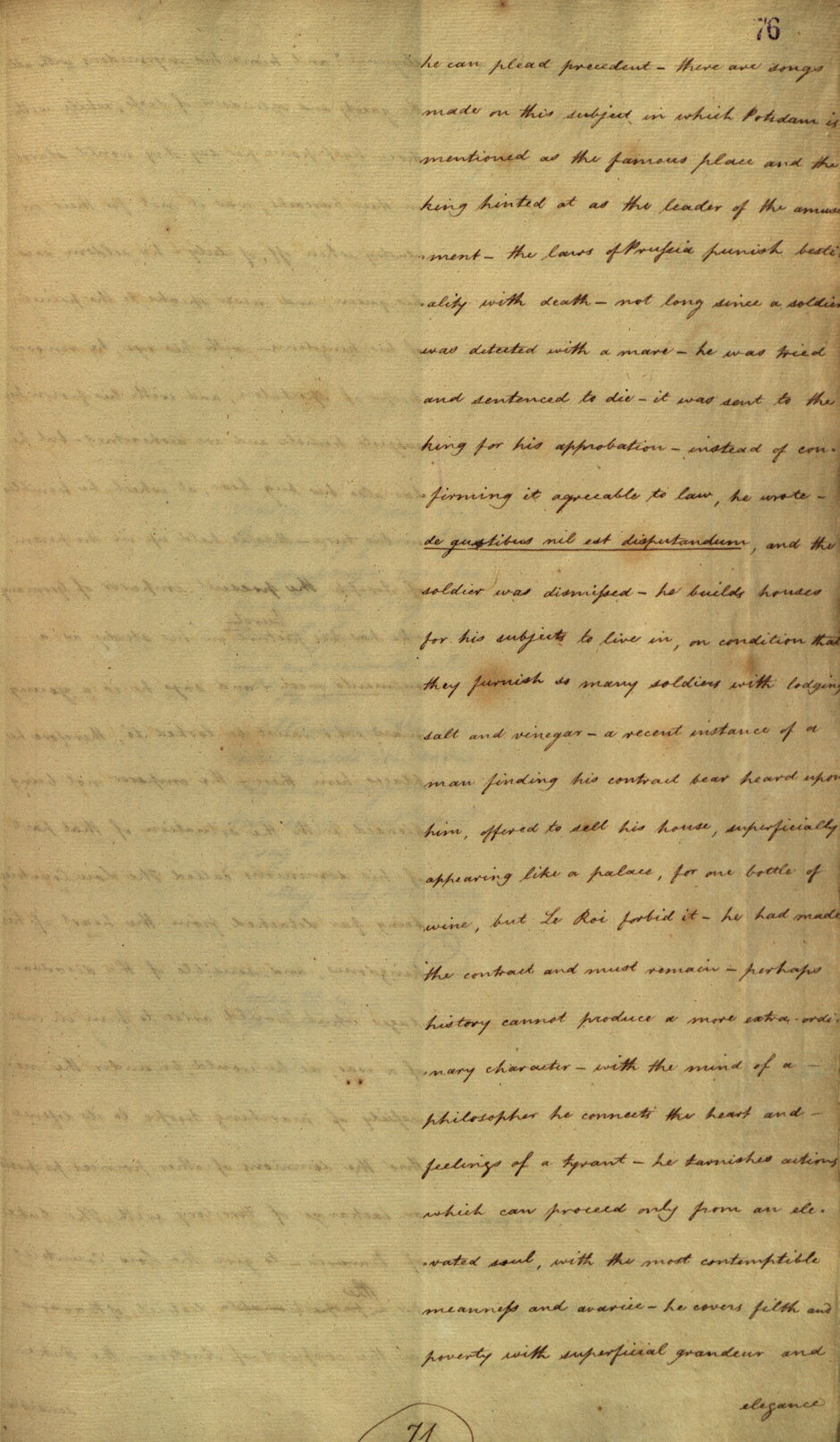
can plead precedent—there are songs made on this subject in which Postdam is mentioned as the famous place and the king hinted at as the leader of the amusement—the laws of Prussia punish bestiality with death—not long since a soldier was detected with a mare—he was tried and sentenced to die—it was sent to the king for his approbation—instead of confirming it agreable to law, he wrote—de gustihus nil est disputandum, and the soldier was dismissed—he builds houses for his subjects to live in, on condition that they furnish so many soldiers with lodging, salt and vinegar—a recent instance of a man finding his contract bear heard upon him, offered to sell his house, superficially appearing like a palace, for one bottle of wine, but Le Roi forbid it—he had made the contract and must remain — perhaps history cannot produce a more extraordinary character — with the mind of a philosopher he connects the heart and feeling of a tyrant—he tarnishes actions which can proceed only from an elevated soul, with the most contemptible meanness and avarice—he covers filth and poverty with sperficial grandeur and elegance
que puede alegar antecedentes. Hay canciones compuestas sobre este tema, en las cuales Potsdam es mencionada como lugar famoso y se insinúa al Rey como líder de la diversión. Las leyes de Prusia castigan con la muerte la bestialidad. Hace poco se sorprendió a un soldado con una yegua; fue juzgado y condenado a muerte y la sentencia enviada al Rey para su aprobación. Este, en vez de confirmarla según la ley, escribió: «de gustibus nil est disputandum», y el soldado fue puesto en libertad.. El Rey construye casas para que sus súbditos vivan en ellas, a condición de que alojen y suministren sal y vinagre a cierto número de soldados. Sucedió recientemente que un hombre, encontrando su contrato demasiado duro de cumplir, ofreció vender su casa, que superficialmente parecía un palacio, por una botella de vino, pero el Rey no aceptó, había hecho el contrato y debía cumplirlo. Quizá la historia no pueda producir un personaje más extraordinario. A la mentalidad de un filósofo, une el corazón y los sentimientos de un tirano; desluce acciones que pueden proceder únicamente de un espíritu elevado, con la mezquindad y la avaricia más despreciables; cubre la inmundicia y la pobreza con grandeza y elegancia superficiales