Colombeia
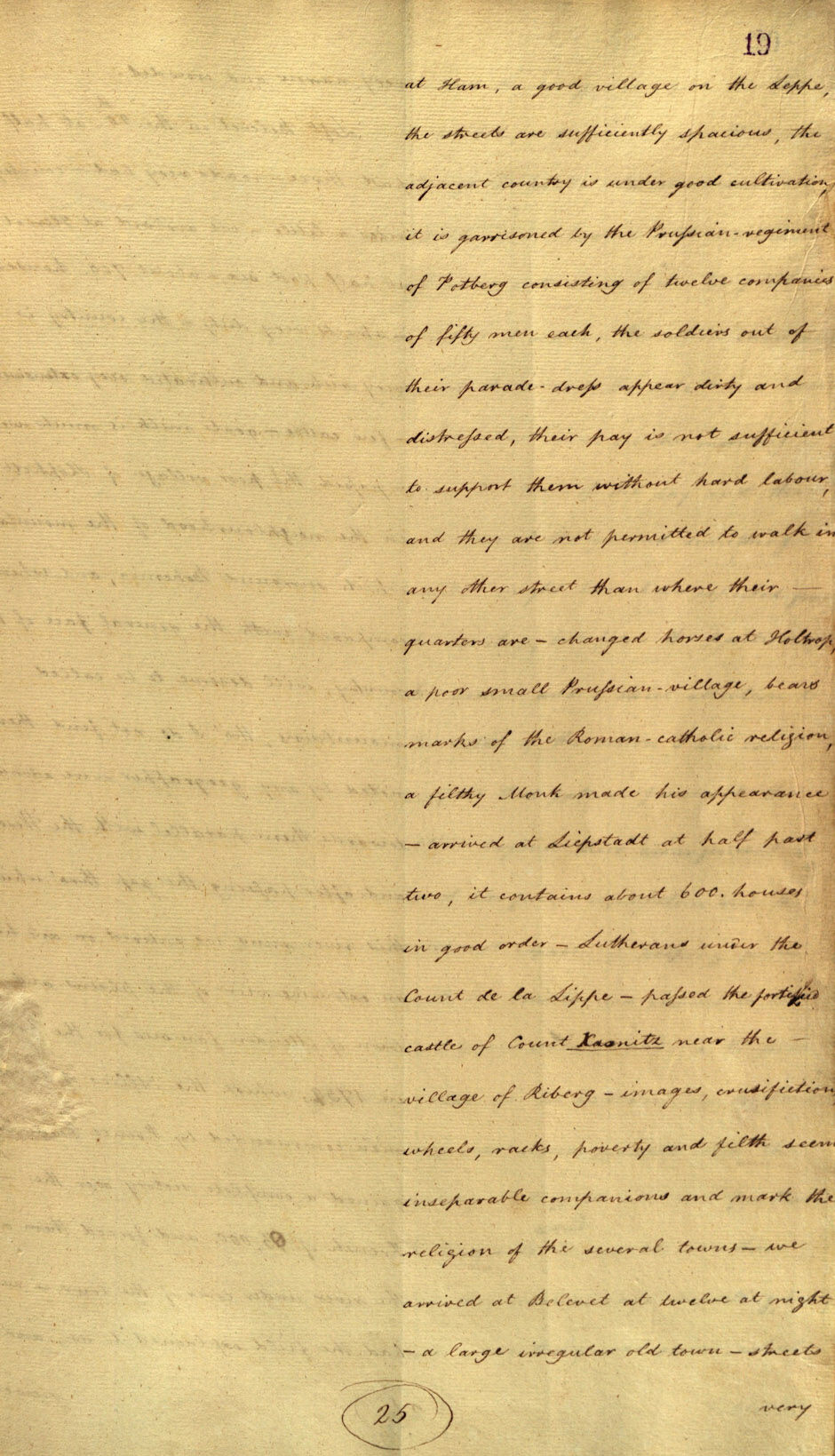
Ham, a good vilage on the Leppe, the streets are sufficiently spacious, the adjacent country is under good cultivation, it is garrisoned by the Prussianregiment of Potberg consisting of twelve companies of fifty men each, the soldiers out of their paradedress appear dirty and distressed, their pay is not sufficient to support them without hard labour, and they are not permitted to walk in any other street than where their quartes are—changed horses at Holtrop, a poor small Prussianvillage, bears marks of the Romancatholic religion, a filthy Monk made his appearance—arrived at Liepstadt at half past two, it contains about 600 houses in good orderLutherans under the Count de la Lippe—passed the fortified castle of Count Kaonitz near the village of Riberg—images, crusifiction, wheels, racks, poverty and filth seem inseparable companions and mark the religion of the several towns—we arrived at Belevet at twelve at night—a large irregular old town— streets very
en Hamm, una bonita aldea sobre el río Lippe, las calles son bastante espaciosas, el campo vecino está bien cultivado. Está allí de guarnición el regimiento prusiano de Potberg, formado por doce compañías de cincuenta hombres cada una; los soldados sin su uniforme militar tienen aspecto sucio y triste; su paga no es suficiente para mantenerlos sin otro duro trabajo y no se les permite pasear en otra calle que no sea la del cuartel. Cambiamos de caballos en Holtrop, una pequeña y pobre aldea prusiana, tiene trazas de la religión católica romana. Un monje zarrapastroso hizo su aparición. Llegamos a Lippstadt a las dos y media, tiene unas 600 casas estado; luterana bajo el Conde de Lippe. Pasamos el Castillo fortificado del Conde de Kaunitz, cerca de la aldea de Rietberg; imágenes, crucifixiones, ruedas, potros, pobreza y suciedad parecen ser compañeros inseparables e indican la religión de varias ciudades. Llegamos a Bielefeld a las doce de la noche; una antigua ciudad grande e irregular; las calles